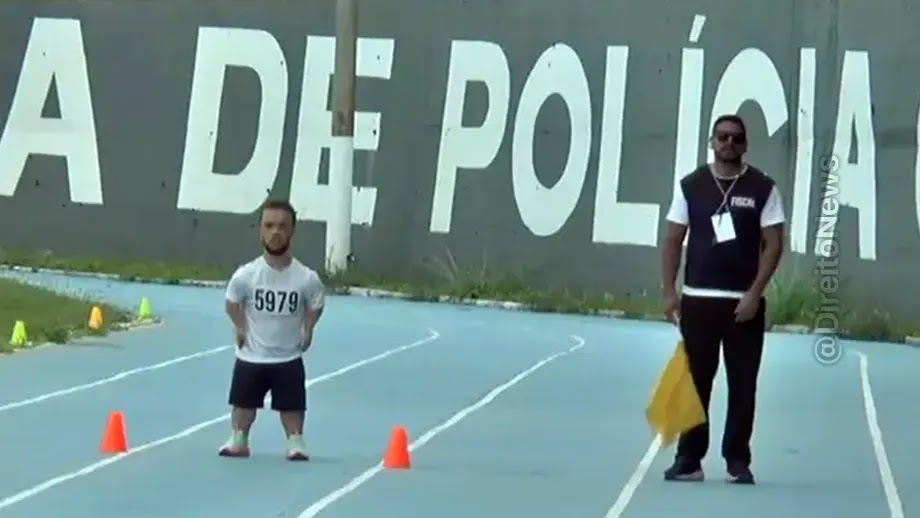
Matheus Menezes' Fight: Paving the Way for Fair Physical Tests for Dwarfism in Concursos
The journey to fulfilling a lifelong dream often demands extraordinary resilience, but for Matheus Menezes, a 25-year-old law graduate from Goiás, his ambition to become a Police Civil Delegate in Minas Gerais hit an unexpected and controversial roadblock. After excelling through rigorous academic and oral examinations, Matheus, who lives with dwarfism, was eliminated from the highly competitive *concurso* due to his inability to meet the standard physical test requirements. His case has ignited a crucial discussion about accessibility, reasonable accommodation, and the urgent need for *adaptação prova nanismo* (test adaptations for dwarfism) in Brazil's public service selection processes.
Matheus's story isn't just about an individual setback; it's a powerful narrative challenging systemic barriers that prevent highly qualified individuals with disabilities from pursuing careers vital to society. His experience underscores a fundamental question: are public service physical tests truly designed to assess essential job functions, or do they inadvertently perpetuate discrimination through rigid, one-size-fits-all standards?
The Dream Interrupted: Matheus Menezes' Journey to Becoming a Delegate
Matheus Menezes embarked on his legal studies in 2019, driven by an unwavering dream to serve as a Police Delegate. This aspiration wasn't just a career choice; it was a deeply personal mission, often met with skepticism and even ridicule. "I have dwarfism, so even today when I tell people I will one day be a Police Delegate, they start laughing at my face and mocking me, saying that I don't have the size or competence for it," Matheus shared on social media. Yet, his faith and determination remained unshaken. "I am a person of great faith and I love overcoming challenges. Being a Delegate has always been my dream, and I believe that if God puts a dream in our minds, it's because He knows it's possible."
His commitment bore fruit as he meticulously navigated the challenging stages of the Police Civil of Minas Gerais (PCMG) *concurso*. Matheus successfully cleared the initial objective phase, demonstrated his legal acumen in the discursive exam, and showcased his communication skills in the oral examination, which took place in October 2023. Having conquered the intellectual hurdles, he stood on the precipice of his dream. However, the next stage – the Teste de Aptidão Física (TAF) – presented an unforeseen and, as he argues, insurmountable obstacle without proper *adaptação prova nanismo*.
The Core Challenge: Lack of *Adaptação Prova Nanismo* in Physical Tests
The point of contention arose during the TAF, specifically the horizontal jump (
impulsão horizontal). The test required candidates to achieve a minimum jump of 1.65 meters. For Matheus, whose height is 1.23 meters, this standard was quite simply "humanly impossible." It wasn't a question of effort or training; it was a biomechanical reality. Recognizing this inherent disparity, Matheus proactively sought a reasonable accommodation. Before the TAF, he submitted an administrative request to the organizing body, Fundação Getúlio Vargas (FGV), pleading for *adaptação prova nanismo* relevant to his condition.
Regrettably, his plea went unanswered. "I requested administrative adaptation of the TAF from FGV, but they were silent and remained inert, not respecting the rights of people with disabilities protected by law," Matheus stated. Forced to participate under the same unmodified conditions as all other candidates, he was inevitably eliminated after failing to meet the horizontal jump requirement. This outcome, Matheus contends, was not a reflection of his capabilities or potential to perform the duties of a delegate, but rather a direct result of an unfair and unadapted testing methodology.
The case brings to the forefront Brazil's commitment to inclusion, particularly the Lei Brasileira de Inclusão (LBI – Brazilian Law on Inclusion). The LBI mandates reasonable accommodations for people with disabilities to ensure equal opportunities. The State Attorney's Office (Procuradoria do Estado) echoed this sentiment, arguing that tests should indeed consider reasonable adaptations in accordance with the LBI. However, FGV and the Civil Police maintained their stance, justifying the standardized application of biophysical tests as long-standing methods for evaluating police qualifications. This legal and ethical standoff highlights a critical disconnect: the letter of the law advocates for inclusion, but its practical application in high-stakes *concursos* often falls short. For more on the specifics of the situation, you can read
Dwarfism Candidate Eliminated from Police TAF: Was It Discrimination?
Beyond Matheus: The Broader Implications for Inclusion and Concursos
Matheus Menezes' struggle is a microcosm of a much larger issue facing individuals with disabilities across Brazil who aspire to public service careers. His case serves as a poignant reminder that while legal frameworks for inclusion exist, their effective implementation, particularly in areas like physical assessment, remains a significant challenge. The National Institute of Dwarfism (Instituto Nacional de Nanismo) has rightfully repudiated Matheus's elimination, reinforcing the collective advocacy for equitable access.
The central question revolves around what constitutes "reasonable adaptation" without compromising the essential functions of a job. For roles like a police delegate, certain physical attributes are undeniably important. However, the exact *measurement* of those attributes must be critically examined. Is a 1.65-meter horizontal jump the only, or even the most accurate, way to assess the agility, strength, or operational capacity required for the job, especially for someone with dwarfism? Perhaps alternative tests, modified indices, or even functional assessments that evaluate the candidate's ability to perform specific tasks relevant to the role (e.g., entering/exiting a vehicle, subduing a suspect using leverage, navigating challenging terrains) would provide a more holistic and fair evaluation. The goal of the TAF should be to determine suitability for the job, not to arbitrarily exclude based on rigid, unadapted metrics.
Practical Steps for a More Inclusive Future:
- For Organizing Bodies (like FGV and PCMG):
- Consult Experts: Engage with disability advocates, medical professionals, and biomechanics experts to design truly inclusive physical tests.
- Review Essential Functions: Clearly define the *essential* physical requirements of the job. Are current TAF metrics truly measuring these, or are they historical benchmarks?
- Develop Adapted Protocols: Create a range of *adaptação prova nanismo* options and other disability-specific adjustments, allowing for individual assessment without compromising professional standards. This could include modified distances, alternative exercises assessing similar capabilities, or time adjustments.
- Proactive Communication: Establish clear channels for candidates to request accommodations and ensure timely, transparent responses.
- For Candidates with Disabilities:
- Document Everything: Keep detailed records of all requests for adaptation, communications with organizers, and responses received.
- Seek Legal Counsel: Engage with lawyers specialized in disability rights and administrative law early in the process.
- Utilize Advocacy Groups: Connect with organizations like the National Institute of Dwarfism for support, advice, and collective action.
- Public Awareness: Sharing personal stories, like Matheus's, can bring much-needed attention and pressure for systemic change.
- For Policy Makers:
- Strengthen LBI Enforcement: Ensure mechanisms are in place to actively monitor and enforce compliance with the Lei Brasileira de Inclusão, especially in public *concursos*.
- Provide Clear Guidelines: Issue specific guidelines for *adaptação prova nanismo* and other disabilities in TAFs across all public sectors.
The concept of
TAF Adaptations for Disabled: Brazil's Law on Inclusion Put to Test is not about lowering standards, but about ensuring that standards are applied fairly and effectively, allowing everyone to demonstrate their true potential.
Navigating the Legal and Ethical Landscape of Concursos
The debate surrounding *adaptação prova nanismo* for physical tests in *concursos* delves deep into complex legal and ethical considerations. Legally, the LBI is unambiguous in its call for reasonable accommodation, defining it as necessary and appropriate modifications and adjustments that do not impose a disproportionate or undue burden. The challenge lies in interpreting "disproportionate burden" and "essential functions" in a practical sense, especially for roles with perceived physical demands.
Ethically, the exclusion of a demonstrably qualified candidate like Matheus Menezes, who excelled in all intellectual stages of the selection process, raises serious questions about fairness and equity. The implicit message sent by such eliminations is that certain individuals, despite their intellectual prowess and dedication, are inherently unsuitable for specific roles due to their physical attributes, even if those attributes are not directly relevant to the essential functions of the job or could be accommodated. True inclusion requires a shift from a "one-size-fits-all" mentality to a more flexible, individualized approach that prioritizes functional ability over rigid, often arbitrary, physical benchmarks. The ultimate goal should be to create public service bodies that truly reflect the diversity of the society they serve.
Conclusion
Matheus Menezes' determined fight against his elimination from the PCMG *concurso* transcends his personal aspirations. It has become a pivotal moment for challenging outdated assessment methodologies and advocating for genuine inclusion in Brazil's public service. His courage in speaking out has brought critical attention to the urgent need for *adaptação prova nanismo* and other reasonable accommodations in physical tests. As Brazil continues its journey towards a more inclusive society, the outcome of cases like Matheus's will be instrumental in shaping the future of *concursos* and ensuring that competence, dedication, and functional ability, rather than inflexible physical metrics, define who gets to serve the public. The path forward demands a collaborative effort from legal bodies, organizing institutions, and society at large to uphold the spirit and letter of inclusion, ensuring that dreams like Matheus's are not unjustly interrupted.